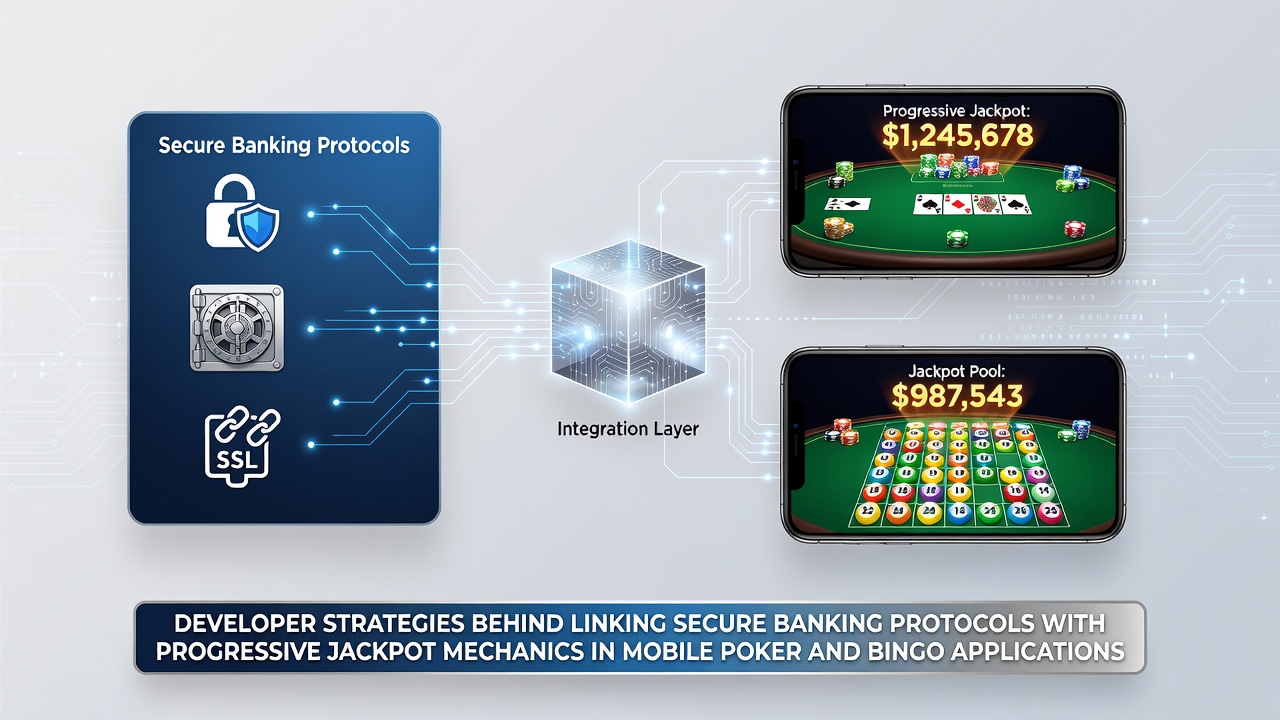
Developer Strategies Behind Linking Secure Banking Protocols With Progressive Jackpot Mechanics in Mobile Poker and Bingo Applications
Developers integrate secure banking protocols with progressive jackpot systems in mobile poker and bingo applications through layered encryption standards, real-time transaction verification, and compliant payment gateways that update jackpot pools across distributed servers. These connections rely on tokenization methods that shield user financial data during each contribution cycle, while application programming interfaces synchronize jackpot growth with every valid wager processed through the banking layer.
Core Technical Integration Approaches
Teams combine PCI DSS compliant payment processors with jackpot management engines so that a percentage of each bet flows directly into the progressive meter without exposing card details or account identifiers. In practice, developers route these transactions through encrypted channels that use TLS 1.3 alongside hardware security modules for key storage, ensuring that jackpot increments register instantly on both the game client and the central ledger. Mobile environments add further constraints because session persistence must survive network interruptions, prompting the adoption of idempotent transaction logs that prevent duplicate contributions or missed updates when connections resume.
Security Protocols in Mobile Environments
Application architects embed multi-factor authentication at the banking interface and pair it with device-bound cryptographic tokens that validate each jackpot contribution before it reaches the progressive pool. Data shows that such dual verification reduces unauthorized access attempts by measurable margins across deployments in multiple jurisdictions. As of August 2026, figures from the Nevada Gaming Control Board indicate rising adoption of these combined controls in mobile gaming platforms operating under state licenses. Researchers at academic institutions have documented how biometric prompts on smartphones further strengthen the link between user identity and jackpot eligibility without slowing gameplay.

Progressive Mechanics Across Poker and Bingo Formats
Poker applications typically seed progressive jackpots from rake portions collected during cash games and tournaments, whereas bingo platforms draw from ticket sales within networked rooms that span multiple operators. Developers unify these mechanics by establishing a shared contribution protocol that accepts inputs from both game types while maintaining separate regulatory reporting streams for each vertical. This approach allows a single jackpot meter to accumulate value from poker blinds and bingo card purchases simultaneously, provided the underlying banking layer applies consistent fee calculations and audit trails. Observers note that synchronization occurs through message queues that process contributions in strict sequence, preventing race conditions when thousands of players place bets within the same second.
Regulatory Alignment and Geographic Variations
Compliance requirements differ by region, prompting developers to build modular banking modules that swap in jurisdiction-specific rules without altering the core jackpot logic. In the United States, platforms reference standards from the Nevada Gaming Control Board to maintain license eligibility, while operators in Australia align with oversight from the Australian Communications and Media Authority on transaction transparency. European deployments often incorporate guidance from the Malta Gaming Authority, which emphasizes real-time reporting of jackpot liabilities. These frameworks converge on the need for immutable logs that trace every contribution from the player’s banking session through to the final payout, a process that mobile developers achieve by embedding timestamped hashes at each step.
Implementation Examples and Performance Data
One documented case involved a cross-platform bingo network that linked its banking gateway to a progressive engine handling both mobile and desktop traffic, resulting in sub-second meter updates across regions. Another project integrated poker applications with tokenized banking flows that supported instant jackpot awards exceeding regulatory thresholds, using automated compliance checks before funds release. Research from industry reports indicates that such integrated systems maintain uptime above 99.9 percent when redundant servers mirror both the banking records and the jackpot state. Those who have studied these deployments highlight the importance of load testing under peak traffic, since simultaneous high-volume bingo calls and poker hands can spike contribution rates dramatically.
Conclusion
Developers continue refining these linkages by testing new encryption variants and exploring distributed ledger options for audit purposes, all while preserving compatibility with existing mobile operating systems and banking partners. The resulting architectures support secure, scalable progressive features that operate consistently across poker and bingo applications under evolving regulatory conditions.